

Tackling freezer floor problems involves addressing thermal shifts, managing water drippage, and enduring heavy forklift traffic. You need solutions that can withstand sub-zero conditions and allow for quick traffic resumption, such as Permatech FFR-40. Using robust joint fillers like our thermal joint repair filler JRP-17 ensures seamless transitions and accommodates thermal expansion. Regular maintenance and timely repairs not only enhance safety but also extend the life of your flooring. So, how do you choose the right materials and processes to keep your freezer floor in top shape?
Freezer Floor Challenges
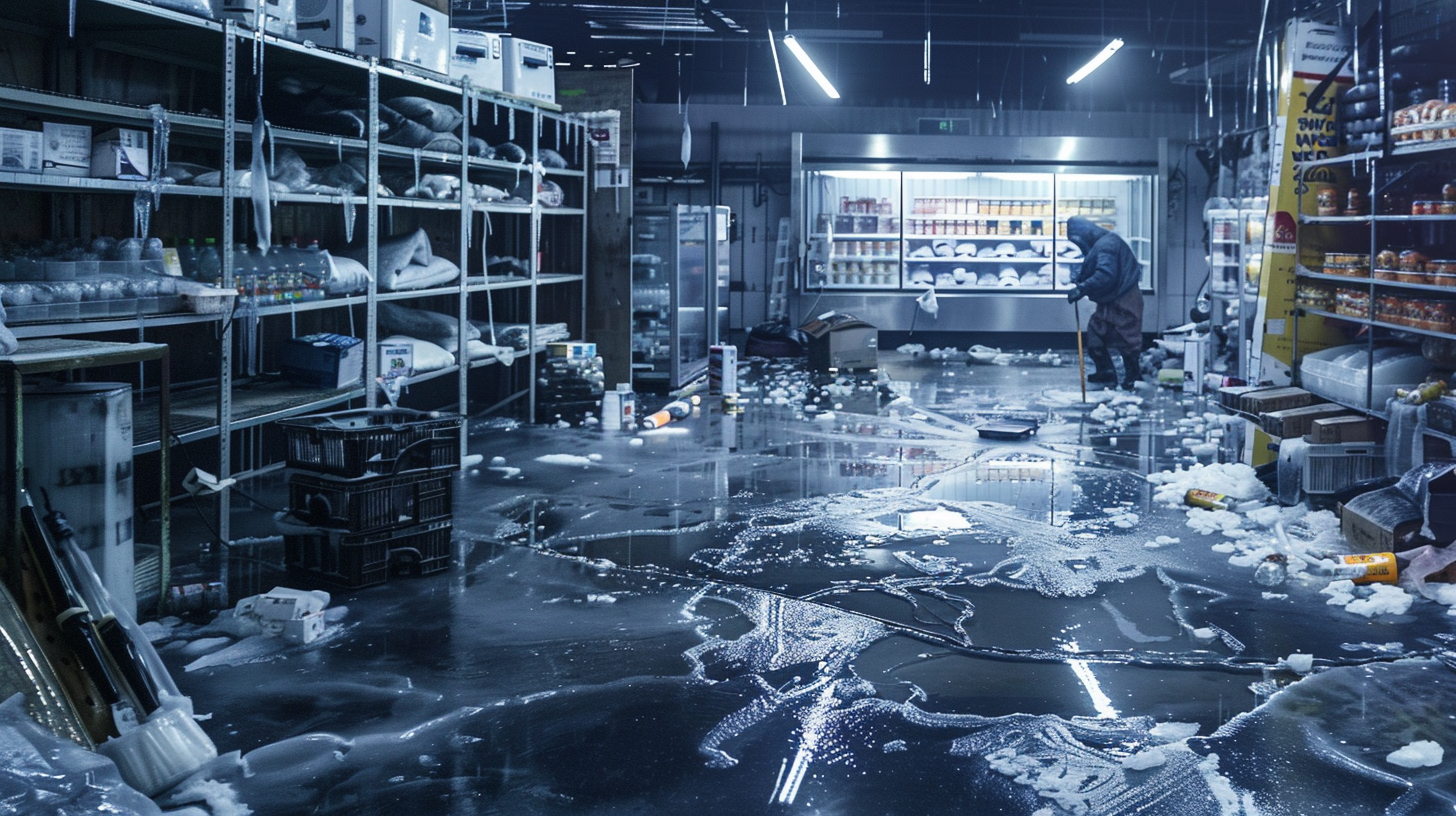
When it comes to freezer floors, constant thermal shifts and water drippage can wreak havoc on concrete surfaces. These floors are subjected to frequent expansion and contraction due to temperature fluctuations, causing the concrete to crack over time. Additionally, water drippage from condensation or spills can lead to ice formation, further weakening the surface and making it prone to damage.
Forklift traffic only makes things worse, especially at the freezer thresholds where the most wear and tear occur. The constant movement of heavy machinery over these already compromised areas accelerates deterioration. As the concrete breaks down, it creates uneven surfaces that not only disrupt operations but also pose significant accident risks for your team.
Addressing these challenges quickly is crucial. Delayed repairs can lead to more extensive damage, escalating costs, and more downtime. Timely interventions help maintain a safe, efficient working environment, ensuring your team feels secure and valued.


Permatech FFR-40 Material
Permatech FFR-40 is a versatile, urethane-based repair material that’s ideal for freezer floor applications. When you’re dealing with constant thermal shifts and heavy forklift traffic, you need a solution that can withstand the harsh conditions.
Permatech FFR-40 is specifically designed for such environments, ensuring durability and strong adhesion even at sub-zero temperatures. You can resume traffic over the repaired area within just one hour of application. This rapid curing time minimizes downtime, crucial for maintaining productivity in high-traffic freezer areas.
Mixed with Patch Crete Course, Permatech FFR-40 fills spalls and holes effectively, creating a smooth, durable surface. What makes Permatech FFR-40 stand out is its proven long-term performance, especially at freezer thresholds where the damage is often most severe.
Its ability to bond well with surrounding concrete enhances the overall integrity of the floor, reducing the risk of future repairs.
Concrete Repair Process
To effectively utilize Permatech FFR-40 for freezer floor repairs, you need to follow a systematic concrete repair process.
First, identify the extent of the damage and cut a deep perimeter slot around the affected area. This step ensures that the repair material will bond well. Remove all decayed concrete, making sure to get rid of any loose pieces that could compromise the repair.
Once the area is clear, thoroughly clean it to eliminate debris and weak spots, providing a solid base for the repair.
Next, mix Permatech FFR-40 in the specified ratio to achieve the optimal consistency. This ensures the material will perform reliably under the demanding conditions of a freezer environment.
Carefully fill the prepared area with Permatech FFR-40, making sure to smooth out the surface for a flush finish. This step is crucial to maintaining an even surface, which reduces accident risks and ensures the longevity of your repair.
Permatech FFR-40 Applications
Utilize Permatech FFR-40 for seamless repairs on both cold and normal-temperature concrete surfaces, ensuring durability and quick curing times. This urethane-based material mixed with Patch Crete Course is perfect for addressing spalls and holes in various concrete scenarios. Its strong adhesion and durability make it an ideal choice for high-traffic areas, such as freezer thresholds, where quick and long-lasting repairs are crucial.
Applying Permatech FFR-40 is straightforward. First, clean the damaged area thoroughly to remove any debris or weak spots. Next, mix Permatech FFR-40 in the specified ratio to achieve optimal consistency. Once mixed, fill the area and smooth out the surface for a flush finish. You’ll appreciate that the repaired section allows traffic resumption within an hour, minimizing downtime and disruption.
Permatech FFR-40’s versatility extends beyond just freezer floors. It’s also effective for outdoor repairs, providing a reliable solution for various concrete issues. By choosing Permatech FFR-40, you’re not just fixing a problem; you’re enhancing the safety and longevity of your surfaces, ensuring they withstand the test of time and heavy use.
Join others in making smart, effective repairs with Permatech FFR-40.
Joint Filler Solutions
Ensuring smooth transitions at freezer doorways, our thermal joint repair filler JRP-17 compound offers a robust solution for joint filling with its impressive elongation and hardness properties.
You’ll find that this compound, with its 300% elongation and 86 shore A hardness, can withstand the constant thermal shifts that challenge freezer floors. It’s designed specifically for metal isolation tracks and concrete, making it ideal for maintaining seamless transitions and preventing damage over time.
To get the best results, start by thoroughly cleaning the joints. Removing debris and weak spots ensures the our thermal joint repair filler JRP-17 adheres properly.
Once the area is prepped, apply the our thermal joint repair filler JRP-17 compound. The application process is straightforward and doesn’t take long, so you can get back to business quickly. In fact, you can resume traffic over the joint in approximately 30 minutes, minimizing downtime and disruptions to your operations.
Frequently Asked Questions
How Often Should Freezer Floor Repairs Be Inspected for Maintenance?
You should inspect freezer floor repairs at least every three months. Regular checks help catch minor issues early, preventing major damage. This proactive approach ensures a safer environment and prolongs the floor’s lifespan.
Are There Any Environmental Concerns With Using Permatech FFR-40?
When it comes to environmental concerns with Permatech FFR-40, rest assured, it’s all above board. This urethane-based material is low in VOCs, so you won’t be adding to pollution while making those essential repairs.
Can Permatech FFR-40 Be Used for Vertical Concrete Repairs in Freezers?
You can use Permatech FFR-40 for vertical concrete repairs in freezers. Its strong adhesion and durability make it suitable for various surfaces, ensuring your repairs last and keep your environment safe and efficient.
What Personal Protective Equipment Is Required When Applying Permatech FFR-40?
When applying Permatech FFR-40, you’ll need gloves, safety goggles, and a respirator to protect against fumes and skin contact. Ensure you’re in a well-ventilated area. Your safety gear keeps you protected and compliant with regulations.
How Does Permatech FFR-40 Compare Cost-Wise to Other Repair Materials?
Permatech FFR-40 might seem like a pretty penny, but its durability and quick curing time save future repair costs. You won’t need frequent fixes, making it cost-superior compared to other materials in the long run.
You won’t believe how easy it is to solve your freezer floor problems.
With Permatech FFR-40’s ability to handle sub-zero temperatures and allow quick traffic resumption, your downtime worries will melt away.
And don’t forget, our thermal joint repair filler JRP-17 joint fillers ensure seamless transitions and manage thermal expansion effortlessly.
Imagine a safer, longer-lasting freezer floor with minimal maintenance.